• Skip to secondary menu
  • Skip to main content
  • Skip to primary sidebar
  • Skip to footer
  • Home
  • About
    • Email Me
    • Disclosure & Copyright
  • Start Here
  • Subscribe
  • Privacy Policy
  • Books for Moms

Creative Family Fun

Your one-stop shop for kids activities and family fun

  • Facebook
  • Instagram
  • Pinterest
  • Twitter
  • Spelling Activities
  • Family Fun
  • STEM
  • Movie Night
  • Toddler Activities

Learning Activities for Kids

Math Homework 101: What is a Hundred Chart?

April 8, 2015 By Terri Thompson

Pull up a chair. It’s time for another addition of Math Homework 101.

Today, we’re answering the question, what is a hundred chart?

What is its purpose? And, why on earth is my kid using it so much in class?!
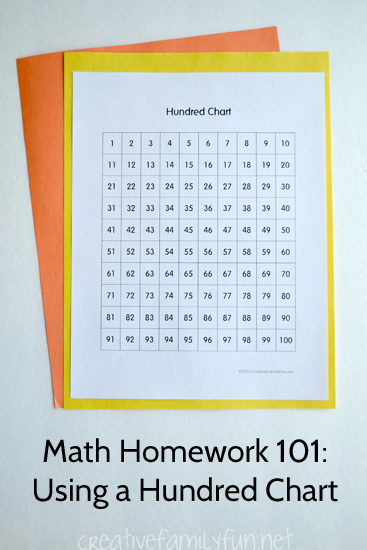
What is a hundred chart and how do you use it? Find out in this informative post for parents that explains all you need to know about this math tool.

Disclosure: This post contains Amazon Affiliate and other affiliate links. Please see my Disclosure Page for more details.

What is a hundred chart?

If your child is in the early elementary years (kindergarten, 1st, 2nd), chances are you’ve seen the hundred chart.

Hopefully your child’s awesome teacher has already sent one home. My daughter has one that stays in her homework binder.

If you don’t have one, I’ve got a couple of versions at the end of this post you can download and print.

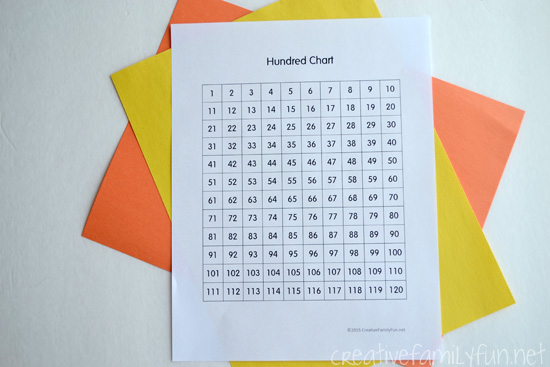
Let’s get down to it! What is a hundred chart?

So, what is the point of the hundred chart? One way you can think about it, is that it’s a bulkier version of the number line. It can help your kids learn number sequencing in the higher numbers. They can use it for addition and subtraction help.

What’s 34 +4? Start at 34 and count 4 spaces to get the answer.

What’s 57-9? Start at 57 and count backward. In this way, it works exactly the way a number line does.
What is a hundred chart and how do you use it? Find out in this informative post for parents that explains all you need to know about this math tool.

But, that’s not all a hundred chart is useful for.

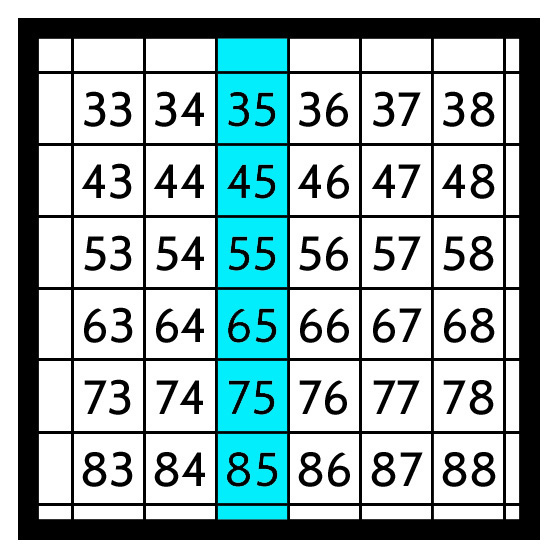
You can use it to see patterns in the numbers. See the highlighted column above. If you find all the numbers that end in a five, you’ll see that they’re in a straight line. Same with the 6’s, 3’s, etc. It’s a great visual tool for any kid that needs to see something to understand it.

The patterns can also be used to help with skip counting. Suddenly, skip counting becomes more than just memorization. Your child can see the numbers they skip over. They can see the pattern.

I’ve seen kids who struggle with skip counting master it after using the hundred chart for awhile. (And by master it, I mean they are able to skip count without using the the hundred chart for help.)
What is a hundred chart and how do you use it? Find out in this informative post for parents that explains all you need to know about this math tool.

What else can your kids learn about numbers with the hundred chart?

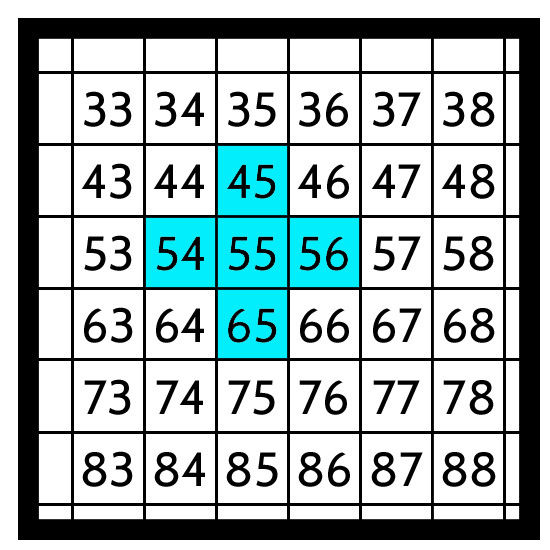
Take a look at the highlighted squares above. The number in the middle is 55. When you isolate that cross, you can see at a glance what the +1, -1, +10, and -10 facts are. Four sets of math facts at once. That’s powerful.

What else can you learn at a glance?

Highlight the columns in two alternating colors. Now you can see even and odd numbers.

Use it to help count coins. Place dimes on the 10’s column or nickles on the 5’s and 10’s. They’ll see how counting money relates to skip counting at a quick glance.

Cover up a number and see how quickly your child can figure out the hidden number. They’ll use the surrounding numbers as clues.

Hundred charts can be used even beyond the lower grades. Check out this post to see ways to use it in the upper elementary years. It can even help with multiplication!
What is a hundred chart and how do you use it? Find out in this informative post for parents that explains all you need to know about this math tool.

Now that you know the answer to the question, what is a hundred chart, it’s time to embrace the hundred chart. It’s a valuable tool to help your child understand math.

Pease click below to download and print your own hundred chart. I’ve included 2 versions. They first is from 1-100 and the other is from 1-120. Many schools (and Common Core standards) are expecting kids to count beyond 100 to 120. Use the chart that best fits your child’s needs.

Hundred Chart 1-100
Hundred Chart 1-120

Now that you have your own hundred chart and have learned all about it, it’s time to do some fun activities. Try one of these fun ideas:

Hundred Chart Fill-in-the-Blank Puzzles – Can your child figure out the missing numbers by their location on a hundred chart?

Driveway Hundred Chart – Make a giant hundred chart on the driveway and play some fun games.

Ways to Play & Learn with a Hundred Chart – A round-up of fun hundred chart ideas from some of the best kid activities blogs.

Do you have any questions about the hundred chart? Ask your questions in the comment section and I’ll answer!

Find all the Math Homework 101 posts at this link.

Math Homework 101: How to Use a Number Line

March 19, 2015 By Terri Thompson

Okay parents, it’s time to chat. I’ve heard from so many people both online and in real life and they are all frustrated with their kids’ math homework. How are we supposed to help them if we have no idea how to help?

I know you’ve got tons of questions because I did too. Things like how to use a number line or what is a hundred chart?

Like it or not, our kids are learning math differently from the way we did. Contrary to a lot of Facebook memes and viral posts, it’s not an inferior way. It’s not. You’re just going to have to trust me on this for awhile.

In fact, I’ll be honest with you, I believe the way I was taught is inferior. My kids will have the advantage when it comes to math.

More than likely you've seen a number line come home in your child's homework, but do you know how to use a number line and how to help your child?

Disclosure: This post contains Amazon Affiliate and other affiliate links. Please see my Disclosure Page for more details.

I’ve taken the time to figure out these new methods of math, and I’m here to help.

I’ve read all the worksheets, asked questions, and did my own homework. And while I was at it, I’ve learned to really like this stuff!

I hear your frustrations, though, and I want to help. You want to be able to help your child with their homework and I’m going to help you do that. We’ll be starting with how to use a number line.

Disclaimer: If you’re a long time reader, you already know this. But, if you’re new here, I want to make sure you know that I’m not a teacher. But, I have done my homework (pardon the pun). I’m talking to you as parent to parent. I want to help you help your kids!

More than likely you've seen a number line come home in your child's homework, but do you know how to use a number line and how to help your child?

What’s the big deal with the number line?

Let’s start with the number line. I know you’ve seen this, especially in the early years of elementary school.

You may also be shaking your head right now and saying: I know what a number line is. I know you do.

But, we’re chatting about it because I’ve seen the worry. “My child will never learn how to do math in their head if they become dependent on a number line!” “You can’t do algebra (or any kind of higher math) if you have to use a number line!” That’s just not true.

Think of the number line the same way you think of training wheels on a bicycle. Your child will eventually learn to ride on just two wheels and never put those training wheels on again.

Just because your child learns to add and subtract using a number line does not mean they will always use one. I promise.

More than likely you've seen a number line come home in your child's homework, but do you know how to use a number line and how to help your child?

How to use a number line

The number line is a visual tool. It helps kids see the relationship between the numbers. They can see the operation they are doing. Addition moves forward on the number line and subtraction moves backwards. In preschool, it’s a simple tool to show number order.

If your kid is just learning addition or if they are struggling with the facts, don’t be afraid to let them use a number line.

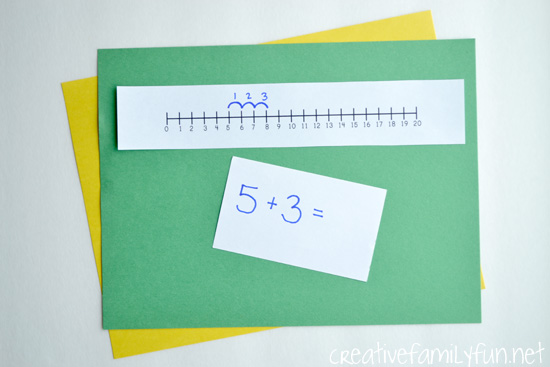
If you’re adding 5 plus 3, start at the number 5. Take 3 hops and you’re at your answer.

Very simple, I know. But remember, these simple things didn’t become simple until we’ve learned them well. By using a number line, your child is going to see how addition changes a number. The number will always get bigger because they are going forward on the number line.

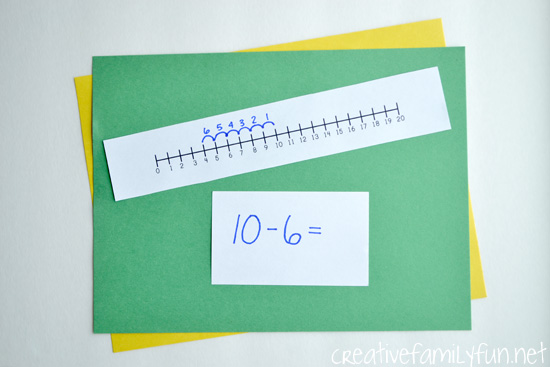
You can also illustrate the basics of subtraction on the number line. For the problem, 10 minus 6, start at 10. Count 6 hops back and you’ve got your answer. Your child can now see that subtraction is moving backward on a number line. They see that their number will always get smaller.

More than likely you've seen a number line come home in your child's homework, but do you know how to use a number line and how to help your child?

Keep a number line at home

Now that you know how to use a number line, I’m sure you want to have one to keep at home.

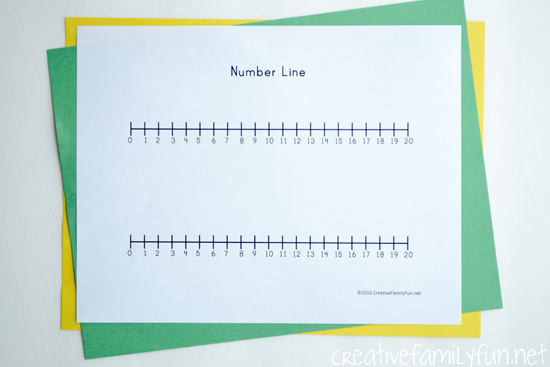
Your child’s teacher may have already provided you with number line. But, if not, I’ve created one for you.

Click the link below to download and print. There are two number lines per sheet.

If you want to reuse it, laminate it. Your child can then use a dry erase marker with the number line. You can also put it between 2 sheets of clear contact paper and still use a dry erase marker. If you don’t have a laminator (and how many of us actually do), use a small item like a coin or a LEGO minifig to bounce around on the number line instead of drawing on it.

Download the number line here.

For more number line practice, check out these posts:

Number Line Secret Codes

Play and Learn with Number Lines

And stay tuned for more Math Homework 101 posts. We’re going to tackle all those things that frustrate you about your kid’s homework! Find all the Math Homework 101 Posts you’ve missed here.

12 Fun Ways to Practice Math Facts

March 9, 2015 By Terri Thompson

We’ve been spending a lot of time memorizing math facts at home and it won’t end any time soon. Because, once we’ve mastered those addition facts, we’ve got to add subtraction facts and then later multiplication.

Needless to say, this can get boring rather fast. So, let’s make it fun with these 12  fun ways to practice math facts.

Ditch the flash cards and practice math with one of these fun ways to practice math facts. These ideas are fun for home or the classroom.

Disclosure: This post contains Amazon Affiliate and other affiliate links. Please see my Disclosure Page for more details.

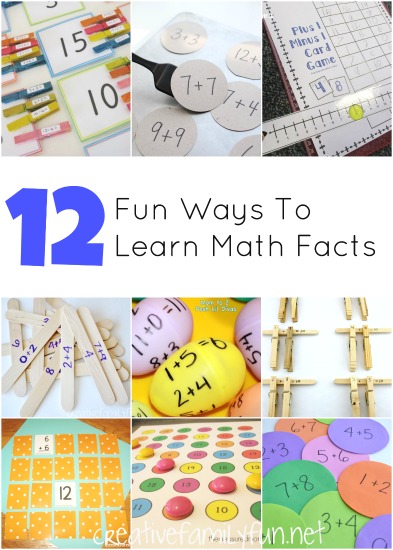
Here are 12 fun ideas for practicing math facts that I’ve rounded up from some fantastic blogs. They are all easy to make and several even come with free printables. Your kids will love these ideas.

Fun ways to practice math facts

Use bubble wrap and dot stickers to make this fun, poppable math facts game from Meaningful Mama.

You can easily make this simple Ways to Make Ten game from Inspiration Laboratories. Grab a few supplies, such as clothespins and craft sticks, and spend a few minutes to make this fun math game.

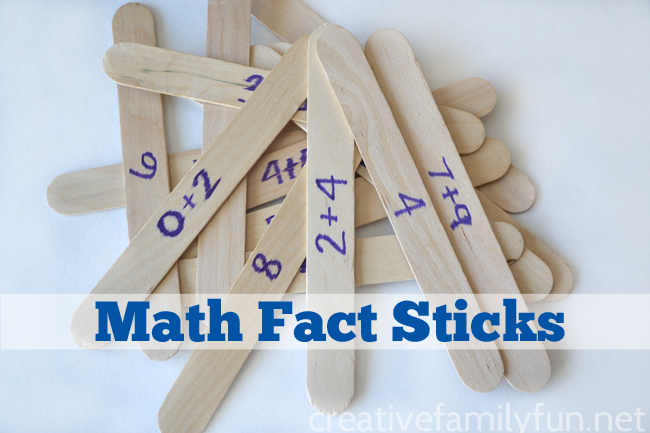
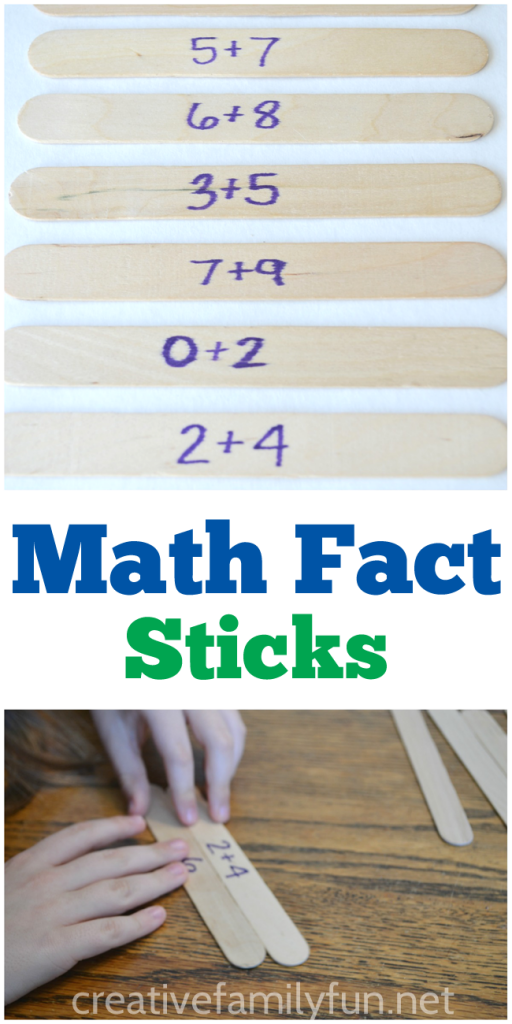
You can also use those craft sticks to make our game of Math Fact Sticks. It’s a little like memory and a lot of fun to play.

Take your learning outside! Kitchen Floor Crafts has a fun game of Sum, Say, and Spray you can play on the sidewalk. Even your most reluctant learner will jump at the chance to use a spray bottle of water during math time.

You can easily use Peg-A-Number Fact Game from Learning 4 Kids over and over again. Download and print the number cards to use with any set of math facts you need.

Boy Mama Teach Mama also has a great, printable math game you can use. Plus 1, Minus 1 Card Game is a fun game to play in pairs (and can be played alone as well.) She also has a printable version of Plus 5, Minus 5 and Plus 10, Minus 10 at this same link.

Grab a spatula! Addition Pancakes from I Can Teach My Child is such a fun way to learn math facts. It’s a DIY game that doesn’t require any special supplies. Your kids will have a blast.

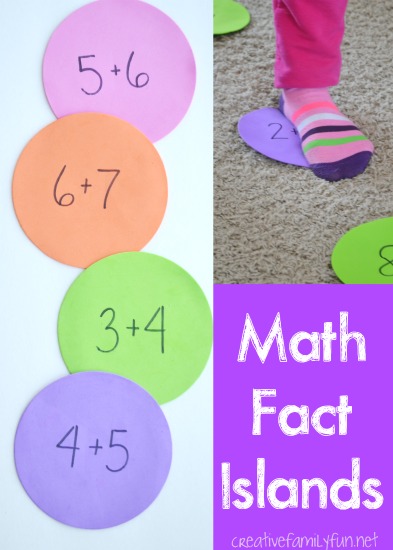
Do your kids need to move while they learn? Make a version of our Math Fact Islands game, so they can jump and learn at the same time.

Gather some play dough and a few other supplies for a game of Ladybug Addition at Rainy Day Mum. Your kids who are just starting to learn their math facts will enjoy this hands-on game.

If you’ve got some plastic Easter eggs, you can make a set of Addition Family Eggs from Mom to 2 Posh Lil Divas. This game is well worth the extra trip to the store to pick up a pack or 2 of plastic eggs.

Is your child trying to master their doubles facts? Download and print this Doubles Facts Addition Game from The Measured Mom. It’s way more fun than flash cards!

If your kids have mastered the easier addition facts and are moving on to the harder ones, The Measured Mom has a great printable game that you can use. All you need is a printer and some playing pieces and you’re ready to go.

Do you know of any other fun ways to practice math facts?

Learn Math Facts with Math Fact Sticks

March 3, 2015 By Terri Thompson

Luckily for us, my daughters’ school is trying very hard to make learning fun for the kids.

I’ve been spending a lot time at their school volunteering in the classroom. While there, I’m learning some fun and easy ways to help the kids learn math facts and succeed at math.

Some of things they are doing would be perfect for at-home practice. I’m going to pass on some helpful hints to you, so you will have the tools your need to help your child succeed.

Math Fact Sticks are a fun and easy game to help your child learn math facts. Play this fun math game with one or two kids.

Disclosure: This post contains Amazon Affiliate and other affiliate links. Please see my Disclosure Page for more information.

These math fact sticks are a variation of a game that they play at my daughters’ school to help the kids learn math facts. I’ve simplified the game a bit so that it works better for us at home and makes it easy to play with one person.

Math Fact Sticks are a fun and easy game to help your child learn math facts. Play this fun math game with one or two kids.

Make the Game

It took me only a few minutes to create the game.

All you need are craft sticks, a permanent marker, and a list of the math facts your child needs to learn.

My daughter often brings home math fact lists or sets of flashcards. Either of these will help you make the game.

If you don’t have that, feel free to ask your child’s teacher for a list of facts your child is learning. Most teachers are delighted to know that you’re working on this at home.

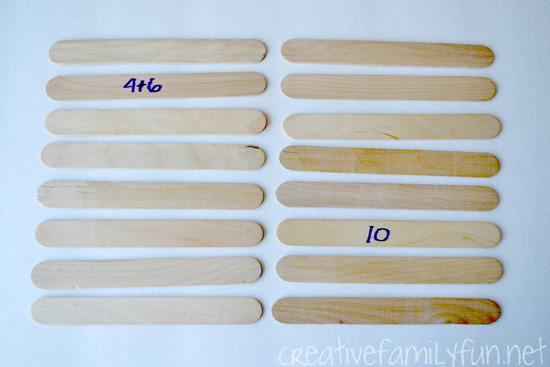
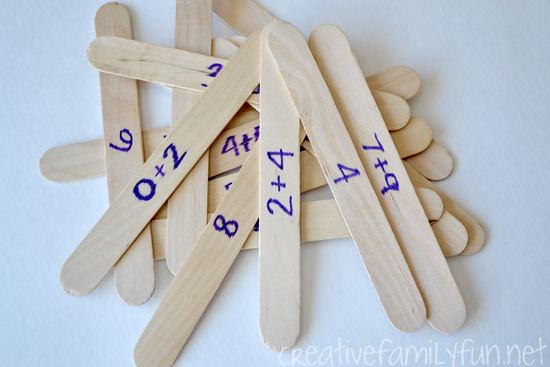
You will need 2 craft sticks for each math problem. Write the problem on one stick and the answer on the other stick. Leave one side of each craft stick blank.

Math Fact Sticks are a fun and easy game to help your child learn math facts. Play this fun math game with one or two kids.

Learn Math Facts While You Play the Game

Divide the sticks into two piles, one for the problems and one for the answers. Lay them out in two columns, blank side facing up.

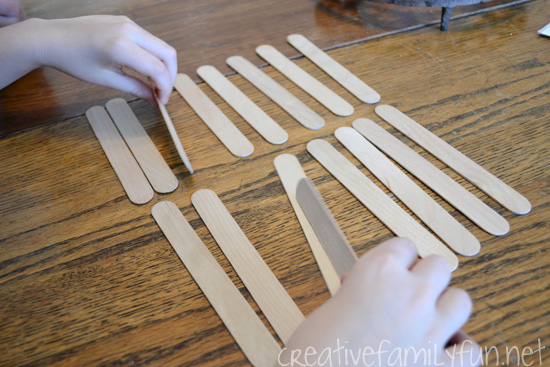
Game play is similar to playing Memory. Turn over one stick from the first column and one stick from the second column. Trying to match the problem to the answer. If the two sticks don’t match, turn them both over and try again.

When you find a match, remove both sticks from the game area.

Keep playing until you find all matches. You can play this game with one to two people.

Math Fact Sticks are a fun and easy game to help your child learn math facts. Play this fun math game with one or two kids.

As my daughter gets more and more comfortable with the math facts, I hear her say the answer before she even turns over a stick from the second column. I know the facts are sticking. She practices more; it’s a game after all. And, I don’t hear any moaning and groaning about math time. Score!

The next time you need to learn math facts, ditch the flashcards and make up a set of math fact sticks instead.

Math Fact Sticks are a fun and easy game to help your child learn math facts. Play this fun math game with one or two kids.

You May Also Like One of These Math Activities:

Pick Two – A Fun LEGO Math Game

Math Fact Islands

Driveway Hundred Chart

Math Paper Plate Games at Better Than Homework

Math Fact Cootie Catchers at There’s Just One Mommy

Fun Math Facts Game – Math Fact Islands

February 23, 2015 By Terri Thompson

Every single day I see the words “practice math facts” in my 2nd grader’s planner. In fact, I also saw that every single day when she was in 1st grade.

Do you see that too?

It’s a hard task, and it’s definitely not something we do on a daily basis. After all, the last thing my daughter wants to do after a full day at school is come home and get drilled with flash cards.

We did a lot of car drills with the easier facts (car drills = me calling out problems while on a car trip and she would try to answer as fast as she could). But now, I’m trying to come up with a fun math facts game so we can practice and have a little fun at the same time.

Learn and move with this fun math facts game, Math Facts Islands. This gross motor math fun is a fun way to practice and a great way to move after school.

Disclosure: This post contains Amazon Affiliate links. Please see my disclosure for more details.

One way to add a little fun to our math fact drills was to add movement. If you’ve got a child that is a kinesthetic learner (one who learns best through movement), take note. They’ll love this fun math facts game and so will any child desperate to move after a long day at school.

Learn and move with this fun math facts game, Math Facts Islands. This gross motor math fun is a fun way to practice and a great way to move after school.

How to make your Math Facts Islands game

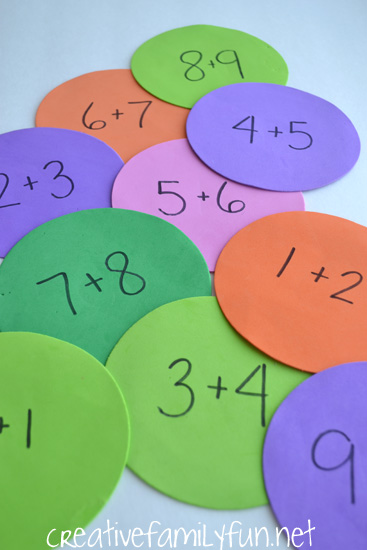
To make the game, I took a pile of craft foam circles and wrote an addition problem one side. I then flipped it over and wrote the answer.

We were working on our doubles +1 facts (5+6, 7+8, 8+9, etc.), but you can play this game with any set of math facts.

I used the craft foam for durability, but you can use paper circles or even paper plates instead.

Learn and move with this fun math facts game, Math Facts Islands. This gross motor math fun is a fun way to practice and a great way to move after school.

How to play this fun math facts game

We scattered the math facts islands on the floor, math problem side up.

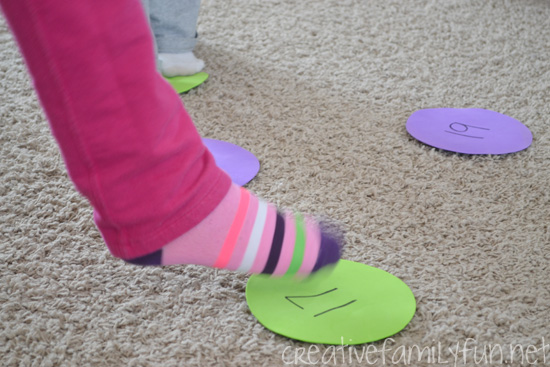
My daughter jumped from island to island and called out the answer when she landed on it.

We did it several times because it was just so much fun.

To add a little challenge to the game, we flipped all the islands over and she had to give me a math problem that matched the answer.

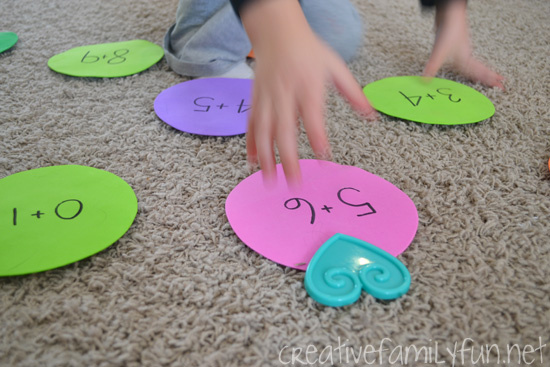
You can play a different version of this game using a coin or other small item that you can toss.

In this version, my daughter would toss the item and try to get it to land on the island. Then, she had to say the answer to the problem.

We enjoyed the jumping version of the game better, but I wanted to share this version because your child is different and may very well enjoy this version better.

Learn and move with this fun math facts game, Math Facts Islands. This gross motor math fun is a fun way to practice and a great way to move after school.

If the idea of practicing math facts with your child makes you groan, try this version. They’ll have so much fun, they won’t even notice how much they’re practicing. Plus, you won’t have to listing to any complaining!

You may also like one of these fun math games:

Addition with Rocks – A Fun Outdoor Math Game

Driveway Hundred Chart

Learn Math Facts with Math Fact Sticks

Making Ten with Cars from Better Than Homework

Nuts and Bolts Number Sentences at Rainy Day Mum

  • « Go to Previous Page
  • Page 1
  • Interim pages omitted …
  • Page 41
  • Page 42
  • Page 43
  • Page 44
  • Page 45
  • Interim pages omitted …
  • Page 61
  • Go to Next Page »

Primary Sidebar

Footer

Categories

Archives

Copyright © 2026 · Designed by The Blog Surgery

Creative Family Fun uses cookies to improve your experience. These cookies provide feedback to our analytics and advertisers. We use the information to track views of the site, where you go and to know if you are a regular visitor or brand new as well as provide a personalized experience where possible. We'll assume you're ok with this, but you can opt-out if you wish.Accept Reject Read More
Privacy & Cookies Policy

Privacy Overview

This website uses cookies to improve your experience while you navigate through the website. Out of these, the cookies that are categorized as necessary are stored on your browser as they are essential for the working of basic functionalities of the website. We also use third-party cookies that help us analyze and understand how you use this website. These cookies will be stored in your browser only with your consent. You also have the option to opt-out of these cookies. But opting out of some of these cookies may affect your browsing experience.
Necessary
Always Enabled
Necessary cookies are absolutely essential for the website to function properly. This category only includes cookies that ensures basic functionalities and security features of the website. These cookies do not store any personal information.
Non-necessary
Any cookies that may not be particularly necessary for the website to function and is used specifically to collect user personal data via analytics, ads, other embedded contents are termed as non-necessary cookies. It is mandatory to procure user consent prior to running these cookies on your website.
SAVE & ACCEPT