• Skip to secondary menu
  • Skip to main content
  • Skip to primary sidebar
  • Skip to footer
  • Home
  • About
    • Email Me
    • Disclosure & Copyright
  • Start Here
  • Subscribe
  • Privacy Policy
  • Books for Moms

Creative Family Fun

Your one-stop shop for kids activities and family fun

  • Facebook
  • Instagram
  • Pinterest
  • Twitter
  • Spelling Activities
  • Family Fun
  • STEM
  • Movie Night
  • Toddler Activities

Terri Thompson

Tips for Observing the Night Sky for Kids

May 16, 2017 By Terri Thompson

You can learn all about the phases of the moon and learned and constellations through activities and books. But one of the best ways to learn is to do the real thing and go stargazing. Observing the night sky for kids is a fun and valuable activity that also perfect for family time.

Stargazing is the perfect activity for a fun family night. It doesn’t require any special equipment. It won’t cost any money. And, if you’re lucky, you may not have to go further than your own front yard.

Grab a thermos of hot chocolate and some snacks. Pack a blanket or two, if it’s cold, and head outside.

Great tip for observing the night sky for kids. Plus, you can write down your observations in this free printable night sky journal.

This post contains Amazon Affiliate links. Please see my disclosure for more details.

Tips for successful stargazing:

Keep a close eye on the weather report. Choose a night that is clear with little to no cloud coverage.

Dress for the weather and remember that it will be colder at night. Bring blankets for sitting on the ground and for extra warmth.

Choose an area with as little excess light as possible. Stay away from street lights and other city lights. The darker it is, the more stars you will see in the sky. Bring your own flashlight for the times when you need a little extra light.

Do your homework. Be able to identify a few constellations and that night’s moon phase. Bring along a star map and know how to read it. You’ll be better able to help your kids have a successful night of stargazing if you equip yourself with some knowledge.

Look for the moon.

If you’re observing the night sky for the first time or are viewing it with preschool-age or younger children, a good starting place is the moon.

Know what that night’s moon phase will be. A full moon night is a fun time for a night sky observation!

There are many easy ways to check the moon phase. I have Moon Phase Pro, an Android app, on my Kindle Fire to keep track of the moon phases. Moon Calendar is a good app for Apple products. If you don’t want to use an app, you can check out a free moon phase calendar at MoonConnection.com.

It’s fun to observe the night sky a few days in a row to see how the moon changes every night.
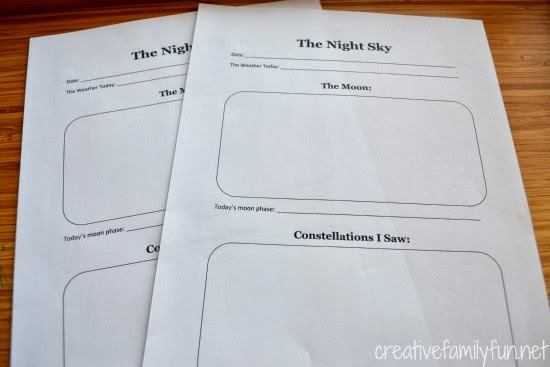
Great tip for observing the night sky for kids. Plus, you can write down your observations in this free printable night sky journal.

Keep a night sky journal

Invite your school-age kids to keep a night sky journal for a few days. Record the night’s moon phase. Look for constellations and draw the ones that you saw.

Compare your journal pages over a few days and note any changes.

I made a simple night sky journal page, free for you to print out and use. Please click here to download and print the journal page. If you want to do something a bit more simple, invite your child to draw or write their observations in a small notebook.

More fun ways to observe the night sky for kids:

The Flourishing Abode has a fun family stargazing night already planned, including a fun printable.

This video from PBS Parents – Adventures in Learning has more helpful tips for stargazing with your kids as wells as information about making your own pocket star guides.

Have you ever gone stargazing with your kids? What are your best tips for observing the night sky for kids?
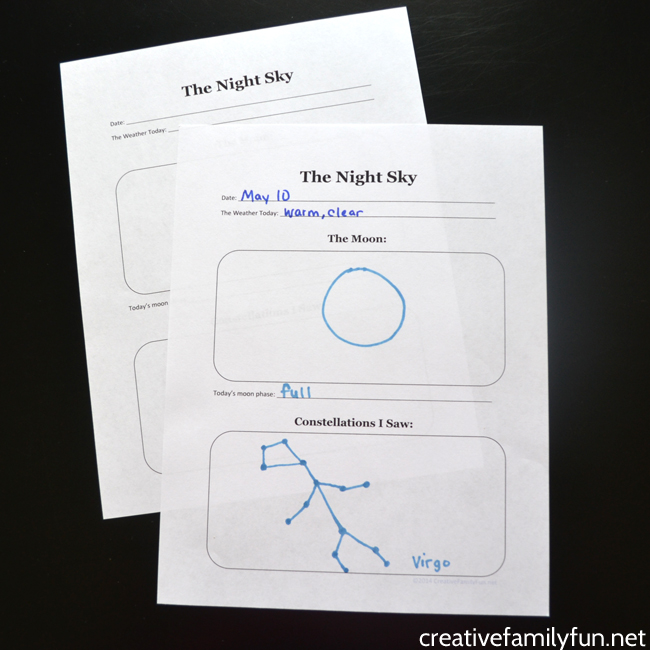
Great tip for observing the night sky for kids. Plus, you can write down your observations in this free printable night sky journal.

If you enjoyed this night sky for kids post, the above photo is perfect for sharing on Facebook or you can share the photo below on Pinterest.
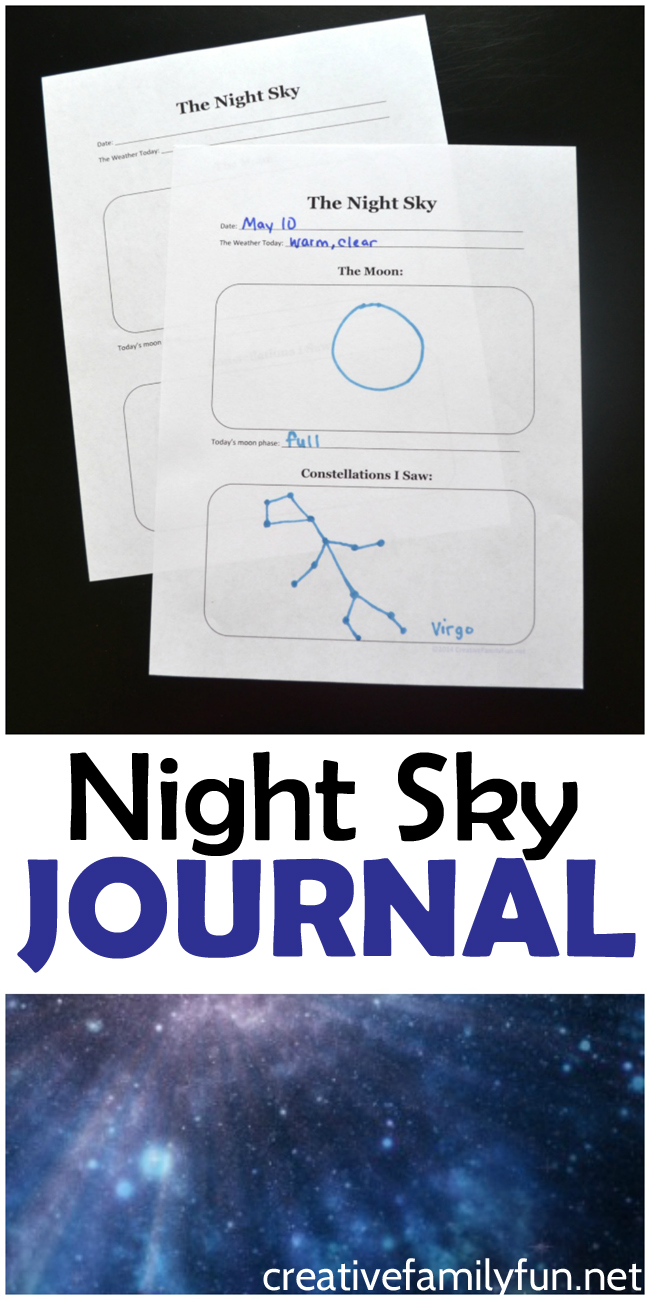
Great tip for observing the night sky for kids. Plus, you can write down your observations in this free printable night sky journal.

You may also like one of these posts:

Phases of the Moon Mobile

Constellation Wall Hangings: Simple Sewing for Kids

Puffy Paint Moon at Rainy Day Mum

Backyard Summer Fun Space Camp at Schooling a Monkey
 

Phases of the Moon Mobile

May 15, 2017 By Terri Thompson

I’ve always found that the moon is the perfect introduction to the night sky for kids. It’s easy to observe; you don’t need any special equipment to see it. Plus, there are so many kid-friendly resources to help you learn about it.

Today’s project is all about the phases of the moon. We took a little learning and turned it into a kids craft project so you can have the moon in your room both day and night.

This phases of the moon mobile is easy and takes only a few supplies, which you may already at home.

Combine science and art to make this simple phases of the moon mobile out of paper plates. It's a fun way to learn about the moon.

Disclaimer: This post contains Amazon Affiliate links. Please see my Disclosure Page for more details.

Learn about the phases of the moon

Every night the moon looks different. Over the course of a lunar month (approximately 30 days) the moon goes through several phases, from new, to crescent, to quarter, to gibbous, to full. It changes because the moon rotates around the earth.

You can get a detailed but kid-friendly explanation here from NASA.

To get excited about the moon and to do a little hands-on learning, we’re going to create a simple illustration of the moon phases.

Combine science and art to make this simple phases of the moon mobile out of paper plates. It's a fun way to learn about the moon.

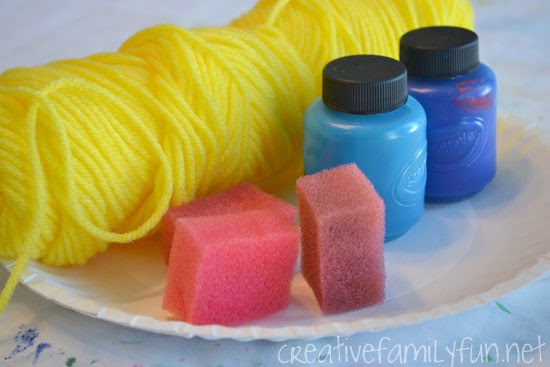
Supplies Needed

2 paper plates
Scissors
Multiple colors of blue paint
Sponge
Hole punch
Yarn
Coat hanger

Combine science and art to make this simple phases of the moon mobile out of paper plates. It's a fun way to learn about the moon.

How to make a Phases of the Moon Mobile

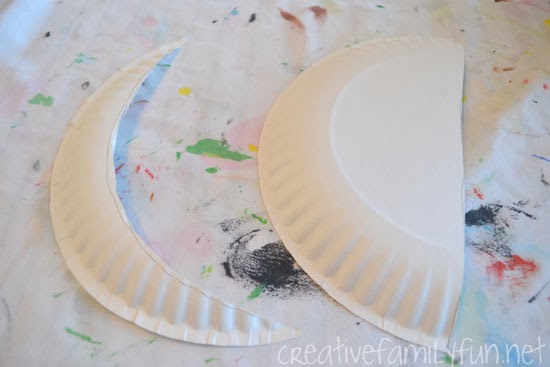
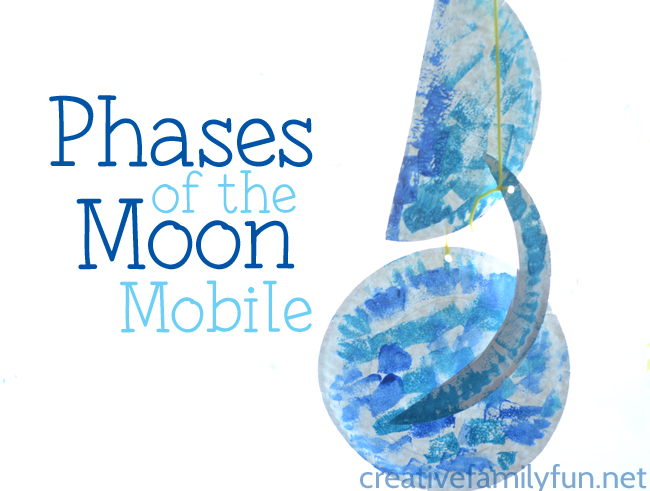
For this moon mobile, we made three moon phases. We made a full moon, a quarter moon, and a crescent moon. You can make as many phases as you would like.

For the full moon, leave one paper plate whole. Cut the other paper plate in half. Use one of the halves for your quarter moon and cut the other half in the shape of a crescent moon.

Combine science and art to make this simple phases of the moon mobile out of paper plates. It's a fun way to learn about the moon.

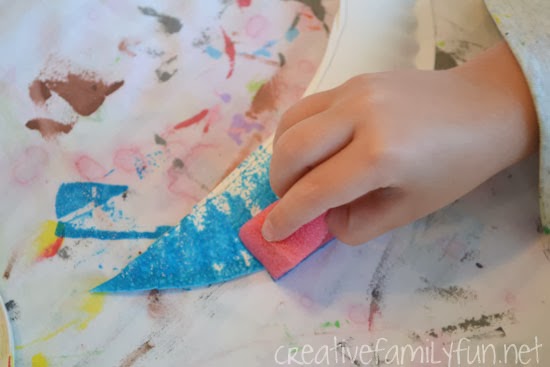
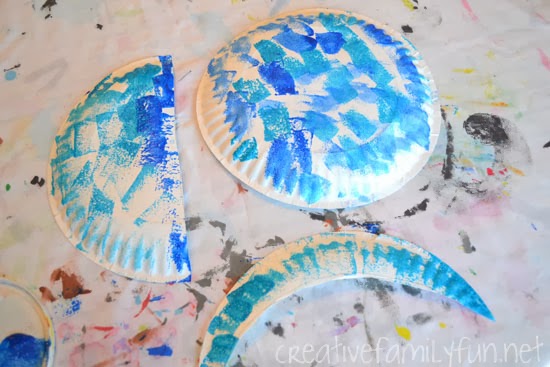
Using your blue paints, sponge paint your three different moons. We only had two different shades of blue so that’s what we used. Use as many shades of blue as you would like, or add in grey and white for a different color scheme. If you only have one shade of blue, use white paint to lighten some of it.

I cut up a sponge into small squares to use for painting. The small squares of sponge are perfect for little hands to use.

Combine science and art to make this simple phases of the moon mobile out of paper plates. It's a fun way to learn about the moon.

After your moons have dried, punch a hole in the top of each. Tie a piece of yarn through your hole and again to your coat hanger.

I varied the length of my yarn so our moon phases would hang at different levels.

Once you’re done, hang your phases of the moon mobile up in your room and wow everyone with your new knowledge of the moon.

Combine science and art to make this simple phases of the moon mobile out of paper plates. It's a fun way to learn about the moon.

To learn more about the phases of the moon

Watch this beautiful video on YouTube. Set to the soundtrack of Beethoven’s Sonata No 14, an animated moon works its ways through all of its phases.

Stop by Kids Activities Blog for another fun project you and your kids can do to chart the moon and learn about the different phases.

MoonConnection.com has a moon phase calendar you can use for reference. You can switch between the northern hemisphere and the southern hemisphere to get the correct moon calendar for your location.

Learn about the night sky with one of these fun ideas:

Tips for Observing the Night Sky with Kids

Fun Night Sky Activities for Kids

Simple Sewing – Constellation Wall Hanging

Puffy Paint Moon at Rainy Day Mum

Counting On Card Game

May 11, 2017 By Terri Thompson

Did you know that you already have two of my favorite tools for math practice in your home?

I promise you do. Just head to your game closet and you’ll find it.

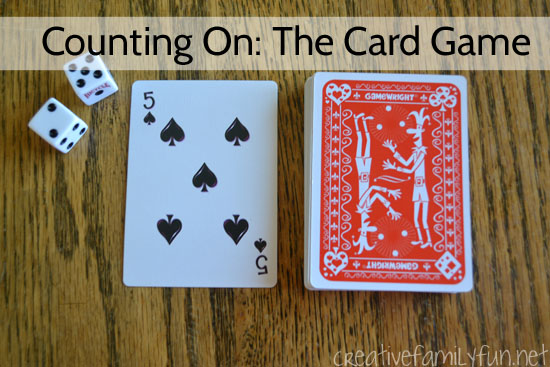
What am I talking about? A deck of cards and a pair of dice. That’s it!

Keep them available during the school year, and you and the kids will have tons of fun practicing math such as this counting on card game to help practice this math skill.

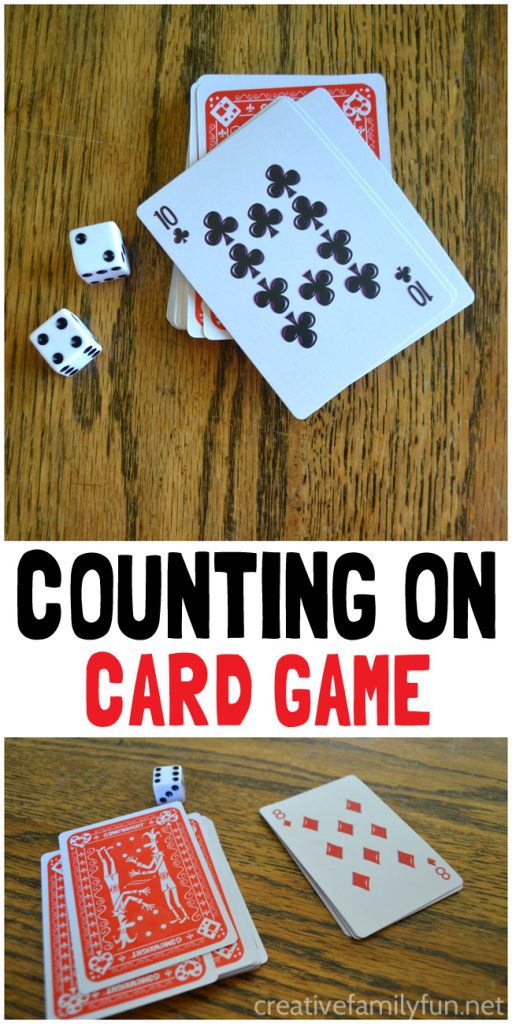
Grab a deck of cards and some dice to play this simple counting on card game. It's an easy way to practice math after school.

In Counting On: The Card Game, we’re practicing the basic skill of counting on (counting beginning at any number other than one).

This game is easy to learn and a cinch to pull together after school. Come on, let’s have fun practicing math.

Disclosure: There are Amazon Affiliate and other affiliate links in this article which means, at no additional cost to you, we could receive compensation for our recommendations. You can read our full disclosure policy on our Disclosure Page for more details.

Grab a deck of cards and some dice to play this simple counting on card game. It's an easy way to practice math after school.

Supplies Needed:

Deck of cards with the Jacks, Queens, Kings, and Jokers removed

Dice (1 or 2)

Or add some movement to this fun game with a giant deck of cards and large dice!

Instructions for this Counting On card game:

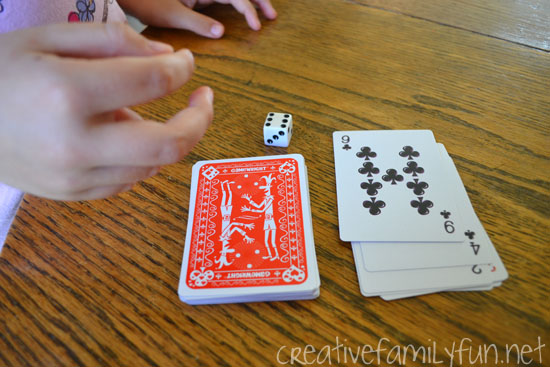
Shuffle and place the cards face down on the table. Player one flips over the top card and starts a discard pile.

Next the first player will throw the dice. Their challenge is to start counting from the number shown on the card and count on the number of times shown on the dice.

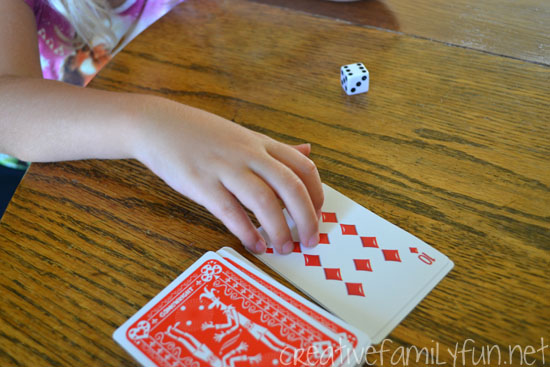
Take turns flipping over a card and counting.

There is no winner or loser in this game. It’s just simply a turn-taking game.

Grab a deck of cards and some dice to play this simple counting on card game. It's an easy way to practice math after school.

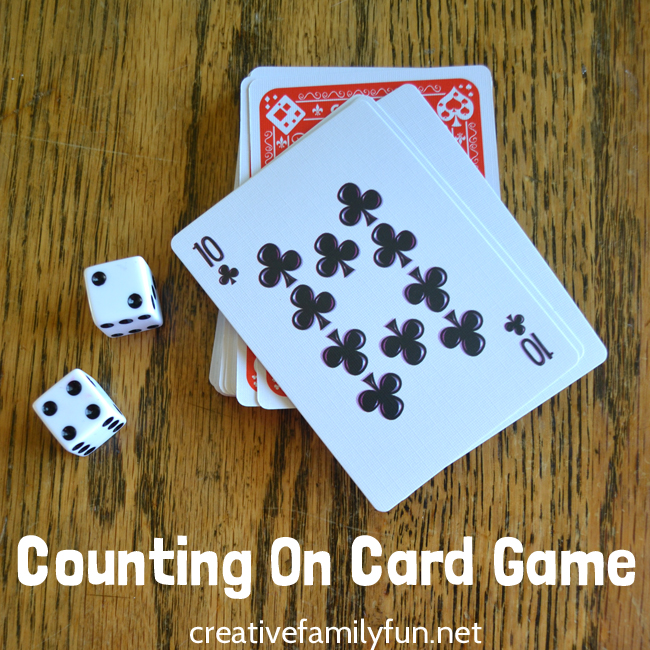
The game is quite simple and won’t take long to learn. In the picture above, my daughter turned over a 10. She then threw a dice and got a 6. She started at 10 and counted: 10, 11, 12, 13, 14, 15, 16.

To make it more difficult, my oldest daughter skipped the counting on and just added the number on the card to the number on the dice in her head. This is a great way to play the game with kids at different skill levels.

What are you waiting for? Let’s go have some fun with math while we play this counting on card game!

Grab a deck of cards and some dice to play this simple counting on card game. It's an easy way to practice math after school.

If you enjoyed this counting on card game, the photo above is perfect for sharing on Facebook or you can share the photo below on Pinterest.

Grab a deck of cards and some dice to play this simple counting on card game. It's an easy way to practice math after school.

You may also like one of these fun learning ideas:

Practicing Counting On in Nature

Pick Two: A Fun LEGO Math Game

Hot Chocolate Science

31 Ways to Practice Spelling Words

Exploring Greater Than and Less Than with Playing Cards at Better Than Homework

Are you looking for more activities?

Join our fun Facebook community, Creative Family Fun for Busy Families, for daily activities that are great for kids and families. We’ll chat, share, and have fun. It’s a safe and private place to share idea for family and kids activities.

I’d love for you to join me! Just click the link below, request to join, and answer the questions (they’re easy, I promise). Come join the fun! Join the Creative Family Fun for Busy Families community here.

Ice Experiments and Play Ideas for Preschoolers

May 9, 2017 By Terri Thompson

Ice is cool. It’s refreshing. And, it’s a lot of fun to play with.

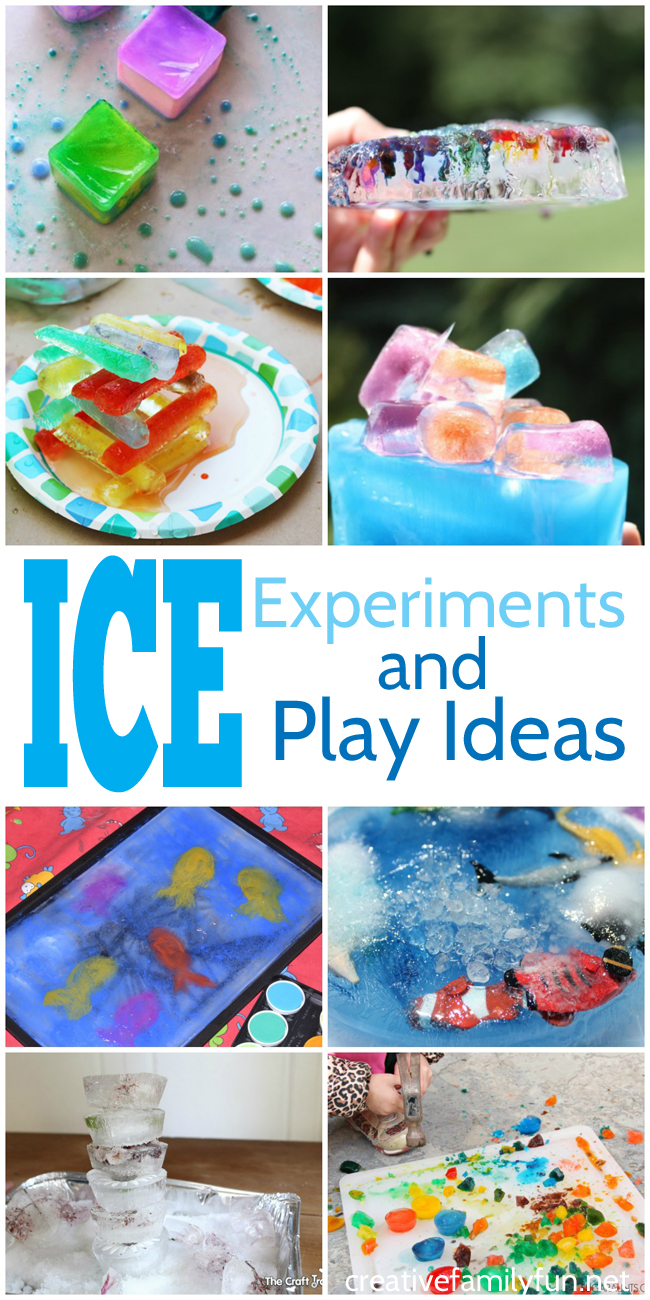
So, get ready to have some fun with these simple ice experiments for preschoolers (and also toddlers). They’ll create, build, excavate, and even practice letters with these fun ideas.

These ideas are perfect for a hot summer day or fun for any day. Who doesn’t want to play with ice?

Learn and have fun with these simple ice experiments for preschoolers. Find out what makes ice melt, make colorful ice creations, and more.

Disclosure: This post contains Amazon Affiliate links. Please see my Disclosure Page for more details.

Simple Ice Experiments

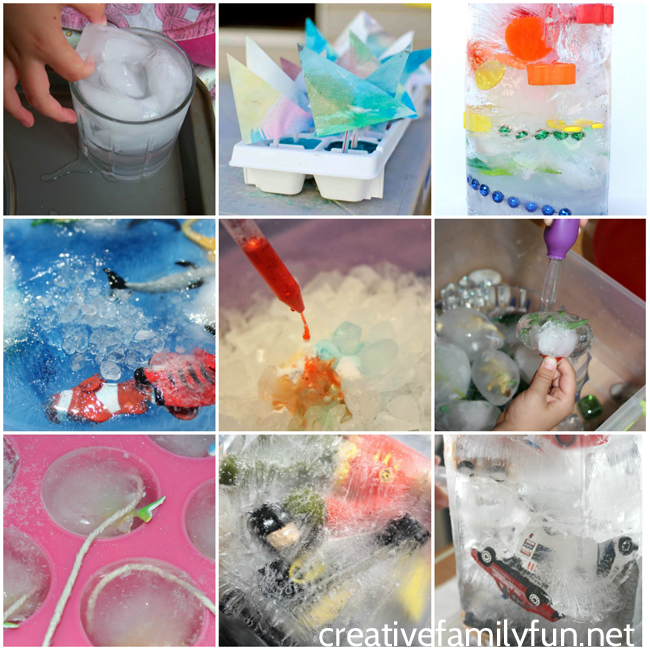
(Pictured left to right above)

Do some super-simple ice activities and experiments that even toddlers will enjoy with these ice play ideas.

Observe how ice floats in water when you make these simple colorful ice boats from Busy Toddler.

Can you rescue all the colorful items in this rainbow ice tower excavation experiment from Fun at Home With Kids?

Experiment with different types of salt to see which will melt ice the fastest in this experiment from Coffee Cups and Crayons.

Explore fizzy ice with this simple science experiment from Toddler Approved.

Rescue dinosaurs from their frozen eggs in this fun experiment from Little Bins for Little Hands.

Go ice fishing and see which temperature of water melts ice the fastest in this fun experiment from Science Sparks.

Can you help Batman escape? Rescue Batman from Ice Mountain in this fun (and exciting) science experiment from Crafts on Sea.

Excavate all the frozen cars you can from a block of ice with this simple ice melting experiment from Little Bins for Little Hands.

Learn and have fun with these simple ice experiments for preschoolers. Find out what makes ice melt, make colorful ice creations, and more.

Create with Ice

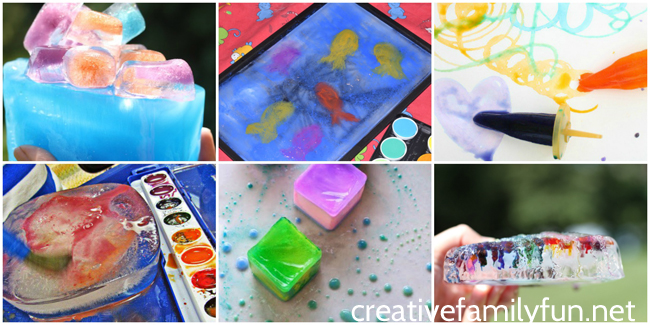
(Pictured left to right above)

Make Frozen Fractuals Ice Sculptures with this fun art activity from Happy Hooligans. This is so much fun for your Frozen fans!

Use ice for a printmaking tools with this fun ocean-themed painting idea from Science Sparks.

Use popsicle molds to make some colored ice pops with this idea from Kids Activities Blog which you can use to make some fun artwork.

An ice block becomes your canvas with this fun ice painting idea from Teaching 2 and 3 Year Olds.

Paint with ice chalk and oil with this fun art idea from Learn Play Imagine.

Create a beautiful (but temporary) sculpture by making rainbow tunnels in ice with this idea from I Can Teach My Child.

Learn and have fun with these simple ice experiments for preschoolers. Find out what makes ice melt, make colorful ice creations, and more.

Sensory Play

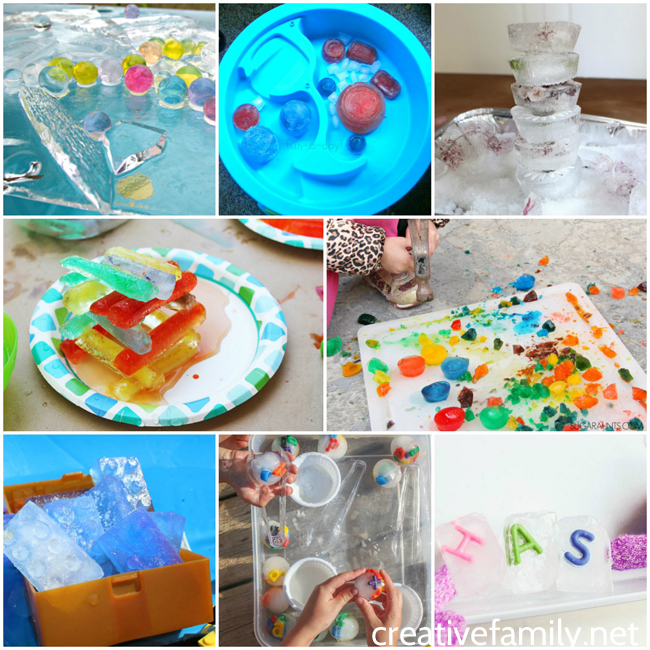
(Pictured left to right above)

Combine water beads with ice with this fun sensory play idea from The Educators’ Spin On It.

Add colored ice to your water table with this fun ice sensory play idea from Fun-A-Day.

Grab a bag of ice for these seven simple sensory play ideas from Lemon Lime Adventures. (not pictured)

Have some fun playing with beautiful flower ice cubes with this idea from The Craft Train.

There are so many fun ways to play with colored ice cubes and sticks. Check out all the fun suggestions here.

Combine some movement and some heavy work for this Ice Cube Proprioception Jump and Smash activity from The OT Toolbox.

Build and play with ice LEGOs with this fun idea from Crafts on Sea.

Learn with Ice

(Pictured left to right above)

Learn your letter and have some icy fun when you play with this ABC Excavation Sensory Bin from Parenting Chaos.

Slide a sounds and build some simple words with this slippery word building activity from Life Over C’s.

Which of these ice experiments do you want to try?

Learn and have fun with these simple ice experiments for preschoolers. Find out what makes ice melt, make colorful ice creations, and more.

If you enjoyed these ice experiments and play ideas, the above photo is perfect for sharing on Facebook, or you can share the photo below on Pinterest.

Learn and have fun with these simple ice experiments for preschoolers. Find out what makes ice melt, make colorful ice creations, explore some sensory play ideas and more.

Build Numbers with a Fun Place Value Activity

May 8, 2017 By Terri Thompson

,Math is a series of building blocks. Each piece builds upon the the previous piece. That’s why it’s so important to understand one piece before moving on to the next piece.

Place value is one of those important pieces. It’s crucial to understand all the different parts of each number.

This place value activity is a fun hands-on and visual way for kids to learn and practice value. Understanding will soon become second nature as they build each number.

Use index cards to create a fun place value activity for elementary kids. They'll build numbers while learning all about the place value of each number.

Disclosure: There are Amazon Affiliate and other affiliate links in this article which means, at no additional cost to you, we could receive compensation for our recommendations. You can read our full disclosure policy on our Disclosure Page for more details.

Set up your place value activity

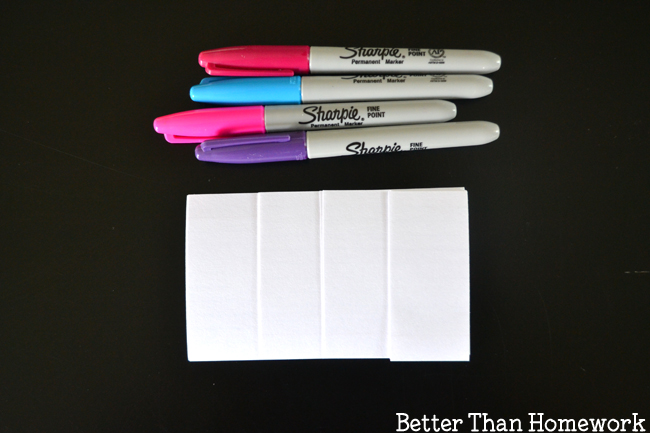
You’ll only need a few supplies for this activity: a pack of index cards, a few markers, and scissors.

Decide how many numbers you want to make. If you make the numbers 1-9 for each place value, your kids will be able to make every number from 1 through 9999.

To make all the numbers, leave nine index cards whole. Cut some in half, so that you have 9 half pieces. You’ll also want 9 pieces that are 3/4 sized and 9 pieces that are 1/4 size.

Use index cards to create a fun place value activity for elementary kids. They'll build numbers while learning all about the place value of each number.

Write your numbers on your index cards. Make sure you write the numbers big enough so that each digit can be covered by 1/4 of the index cards.

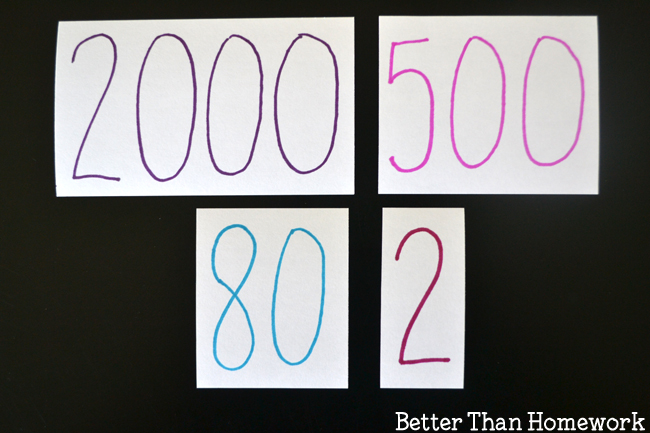
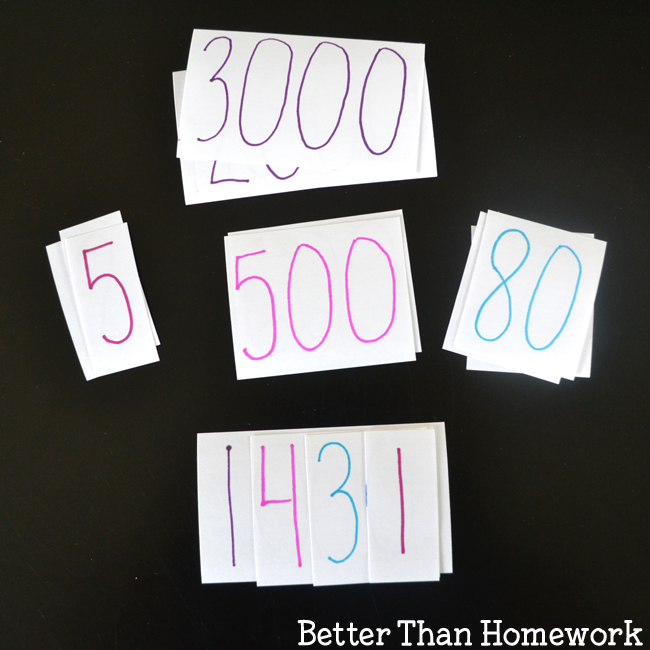
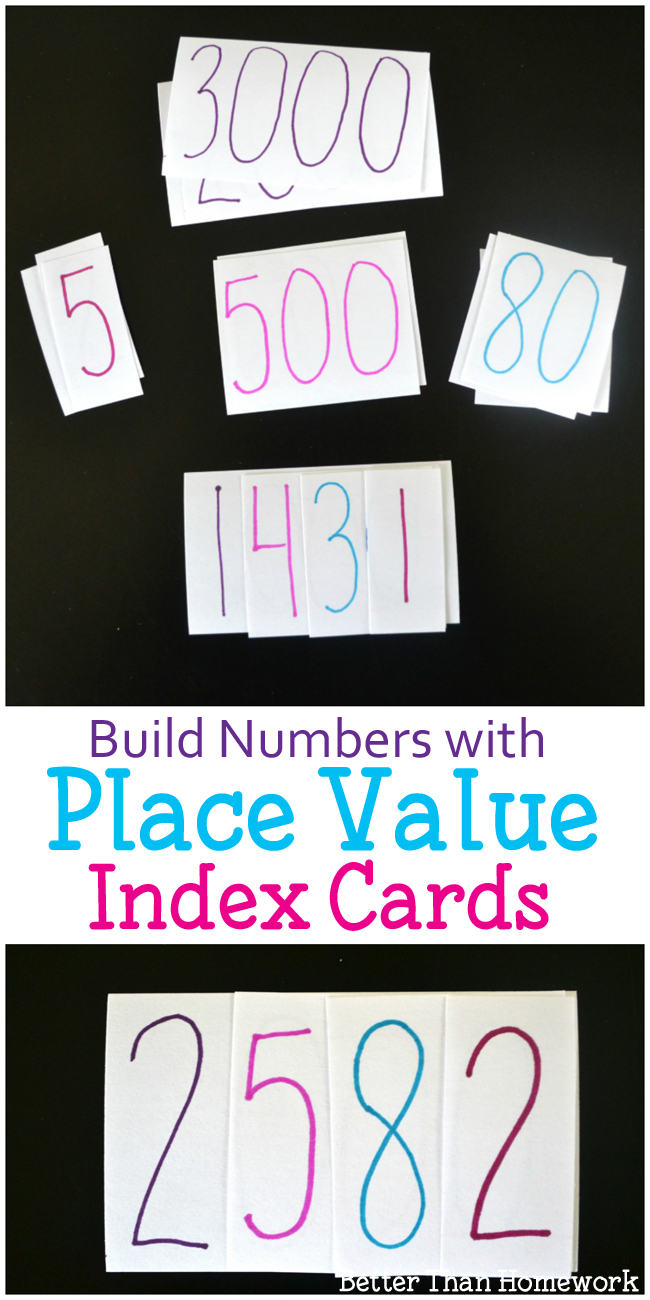
The whole cards will be for your thousands. Write the number 1000, 2000, 3000, through 9000 on the cards.

On your 3/4-sized cards, write your hundreds from 100 – 900.

Your 1/2-sized cards are for your tens and your 1/4-sized cards are for your ones.

Use index cards to create a fun place value activity for elementary kids. They'll build numbers while learning all about the place value of each number.

Build your numbers

Use your place value index cards to build new numbers.

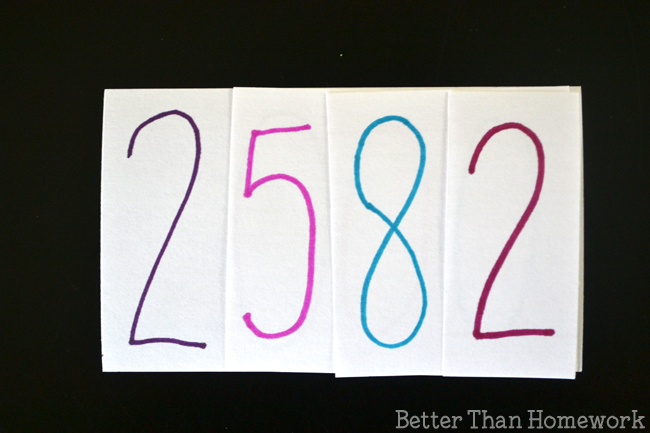
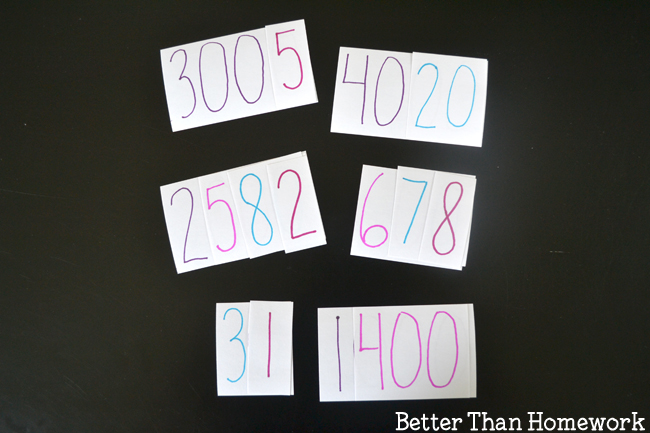
Start with a base of one of your thousands cards. Add a hundreds card, next a tens card, and then finally a ones card. Step by step, your child will be able to see how each number fits with place value.

When you take the numbers apart, you can lay them out next to each other to see how the number is built by place value, 2000 plus 500 plus 80 plus 2 equals 2582.

The number possibilities are endless!

Use index cards to create a fun place value activity for elementary kids. They'll build numbers while learning all about the place value of each number.

More ways to play and learn with your Place Value Index Cards

*Add extra elements to increase the learning. Build the number. Say the number. Write the number.

*Say a number out loud and then have your child build that number.

*Build four or five different numbers and put them in order from smallest number to largest number.

Use index cards to create a fun place value activity for elementary kids. They'll build numbers while learning all about the place value of each number.

If you enjoyed this place value activity, the above photo is perfect for sharing on Facebook or you can Pin the photo below on Pinterest.

Use index cards to create a fun place value activity for elementary kids. They'll build numbers while learning all about the place value of each number.

You may also like one of these math activities:

Hands-On Perimeter Lab

Math Paper Plate Games

Domino Addition

Math Fact Sticks at Creative Family Fun

Learn Place Value with Building Blocks at Teach Me Mommy


  • « Go to Previous Page
  • Page 1
  • Interim pages omitted …
  • Page 51
  • Page 52
  • Page 53
  • Page 54
  • Page 55
  • Interim pages omitted …
  • Page 190
  • Go to Next Page »

Primary Sidebar

Footer

Categories

Archives

Copyright © 2026 · Designed by The Blog Surgery

Creative Family Fun uses cookies to improve your experience. These cookies provide feedback to our analytics and advertisers. We use the information to track views of the site, where you go and to know if you are a regular visitor or brand new as well as provide a personalized experience where possible. We'll assume you're ok with this, but you can opt-out if you wish.Accept Reject Read More
Privacy & Cookies Policy

Privacy Overview

This website uses cookies to improve your experience while you navigate through the website. Out of these, the cookies that are categorized as necessary are stored on your browser as they are essential for the working of basic functionalities of the website. We also use third-party cookies that help us analyze and understand how you use this website. These cookies will be stored in your browser only with your consent. You also have the option to opt-out of these cookies. But opting out of some of these cookies may affect your browsing experience.
Necessary
Always Enabled
Necessary cookies are absolutely essential for the website to function properly. This category only includes cookies that ensures basic functionalities and security features of the website. These cookies do not store any personal information.
Non-necessary
Any cookies that may not be particularly necessary for the website to function and is used specifically to collect user personal data via analytics, ads, other embedded contents are termed as non-necessary cookies. It is mandatory to procure user consent prior to running these cookies on your website.
SAVE & ACCEPT