• Skip to secondary menu
  • Skip to main content
  • Skip to primary sidebar
  • Skip to footer
  • Home
  • About
    • Email Me
    • Disclosure & Copyright
  • Start Here
  • Subscribe
  • Privacy Policy
  • Books for Moms

Creative Family Fun

Your one-stop shop for kids activities and family fun

  • Facebook
  • Instagram
  • Pinterest
  • Twitter
  • Spelling Activities
  • Family Fun
  • STEM
  • Movie Night
  • Toddler Activities

Nature Activities for Kids

Explore Nature: Forest Treasure Jars

August 13, 2012 By Terri Thompson

Earlier this summer we spent a wonderful week at Lake Catherine State Park.

We spent the week camping with my parents, hiking, swimming, and impressing the park rangers with our knowledge of bird skulls.

Instead of the usual souvenirs, such as t-shirts or small trinkets, we brought back several nature treasures we found on walks around the park.

Disclosure: There are Amazon Affiliate and other affiliate links in this article which means, at no additional cost to you, we could receive compensation for our recommendations. You can read our full disclosure policy on our Disclosure Page for more details.
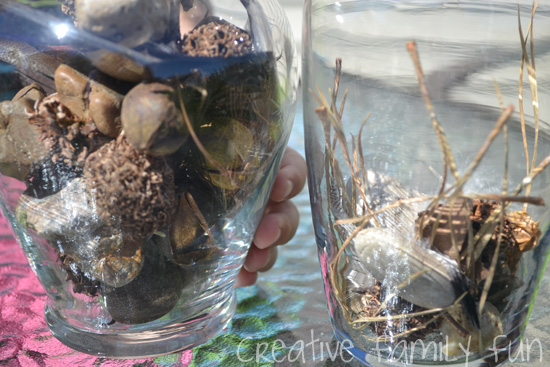
After a few week of these treasures sitting around in our nature bags, I knew it was time to do something with them.

I wanted to do a version of these nature jars I had been seeing all over Pinterest.

I rounded up a few jars and vases I had that were sitting around and gathering dust. We then gathered up our jars and nature treasures and got to work.

We worked carefully adding our treasures.

We had gumballs, feathers, rocks, pine needles, and pine cones.

The girls arranged them carefully, adding and subtracting until they were pleased with the results.

We had a great time talking about all the treasures we had found on our trip.

When we were all done, we artfully arranged them on our table. Now we have a beautiful centerpiece and wonderful memories of our trip every time we sit down to eat.

What is your favorite vacation souvenir?
Exploring Nature: Worms

May 31, 2012 By Terri Thompson

My girls have always been fascinated by worms.

They will run screaming from a tiny spider, but will gladly hold a wiggly worm in their hands.

They’ve learned that worms are a welcome presence in our gardens and will always give the lost worms they find in their sandbox a new home in our garden.

This is the extent of their knowledge about worms, so I thought it was time to learn about worms and why they are so helpful to our gardens.

Disclosure: There are Amazon Affiliate and other affiliate links in this article which means, at no additional cost to you, we could receive compensation for our recommendations. You can read our full disclosure policy on our Disclosure Page for more details.

We started by reading the book Yucky Worms: Read and Wonder by Vivian French.

In the book, a young boy learns about worms from his Grandmother. He learns that they aren’t yucky, but that they are our friends.

We were fascinated by the fact that worms have 5 pairs of hearts and we tried to wriggle around like a worm.

We learned that they help fertilize the soil and that the tunnels they build help keep the soil loose.

By the time we were done with the book, we were ready to try to find some worms of our own.

We decided to make a “worm hotel” so we could watch the worms crawl and see the tunnels they made.

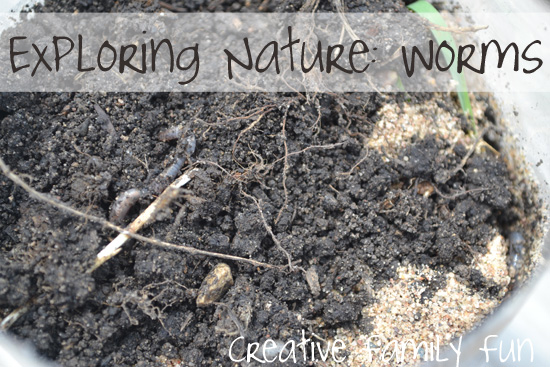
We made a version of this worm farm from A Mom With a Lesson Plan. I cut the top off of a 2-liter soda bottle for our hotel.

While AJ and I looked for worms, Lizzie started layering the sand and soil. We started with a layer of soil from the garden, added a layer of sand, and then a layer of partially composted materials from our compost bin. She repeated these layers about 3 times.

Despite having rained the day before, we still had difficulties finding our worms.

Eventually, after digging far into our compost bin, we found five worms to observe.

They immediately started tunneling.

We watched in fascination for a long time as they dug and crawled around.

Our layers didn’t stay neat for very long, but that’s okay. The worms were crawling around too much!

It didn’t take long for the girls to actually see the tunnels a worm leaves behind in the soil.

We took the worms inside and made a sleeve to fit over the bottle with dark construction paper and a cute little sign that says “Worm Hotel.”

We’ve been observing them for a week now, and tomorrow we’ll release them back into the compost bin. I know they’ll be happy to go home!

Are your kids fascinated by worms?

Earth Day Every Day: Be a Friend to Trees

May 1, 2012 By Terri Thompson

None of us would be here on Earth if it wasn’t for trees.

We’ve learned about them and looked closely at them, but I also wanted to show the girls why trees are so important.

Disclosure: There are Amazon Affiliate and other affiliate links in this article which means, at no additional cost to you, we could receive compensation for our recommendations. You can read our full disclosure policy on our Disclosure Page for more details.

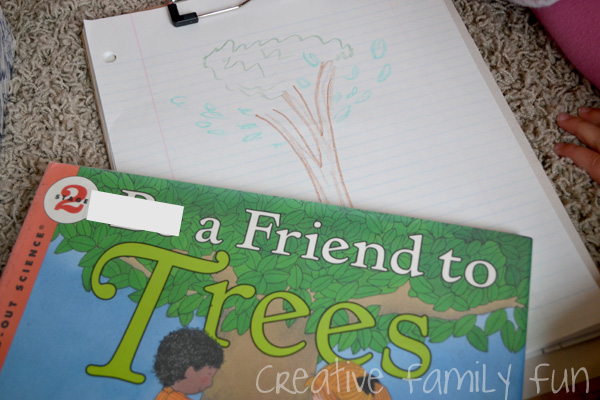
I found a copy of Be a Friend to Trees by Patricia Lauber at our library and it was the perfect tool to learn about the importance of trees.

While reading the book, we stopped every few pages to talk about trees.

We learned about all the things made from wood and how paper was made.

We learned about the different animals that make their homes in trees as well as the different animals that use trees for food.

We tried to see just how many animals we could think of that used trees for food. And we most certainly can’t forget ourselves. Life just wouldn’t be the same without a crunchy apple to snack on!

We also went on a scavenger hunt to see how many things we could find in our house that we made from trees.

We found our clipboard, the window frames, our coffee table, and a bookcase. And that was all before we got up to walk around! What would we do without trees!

We learned a lot from this lesson. Here are some of the things the girls took away from it:

The world is full of things made from trees.
Trees are an important source of food for many animals (and ourselves).
We need to be kind to trees and not use them all up.
One way we can conserve is to use both side of paper when drawing. (A very important point that the girls are very good about doing.)
It’s important to recycle, so we can make new things out of old things and save a few trees in the process.

The book, Be a Friend to Trees, was a helpful tool in learning about the importance of trees. But, if you don’t have access to the book, the Arbor Day Foundation has some helpful information on their Website. Get the conversation started!

10 Ways to Explore Nature in Spring

April 26, 2012 By Terri Thompson

Spring is such a beautiful time of the year to get out and explore nature. Everything is fresh and new and there is so much to see and explore. Here are 10 fun ways to explore nature in spring.

Disclosure: There are Amazon Affiliate and other affiliate links in this article which means, at no additional cost to you, we could receive compensation for our recommendations. You can read our full disclosure policy on our Disclosure Page for more details.

1. Look for signs of life. Look for tree buds, new flowers, fresh green grass, or a bird’s nest. Childhood Beckons recently went on a Signs of Spring Nature Hunt and found all sorts of beautiful things.

2. Look closely. Take a pair of binoculars, a magnifying glass, or your camera and look up close at nature. Examine a tree or a flower. Take a close look at a rock. I have some great tips for looking up-close at nature here.

3. Play in the rain. Jump in a puddle. Spring is the perfect time to play in the rain! Grab a rain coat and some rain boots and have a little fun. Mom to 2 Posh Lil Divas recently had fun in the rain. Wordplayhouse shares five fun ways to play outside on a rainy day.

4. Plant a seed and watch it grow. There is no easier way to learn about plants and how they grow than to plant one yourself. It’s fascinating and kids love to water and care for their tiny little plants. Juggling With Kids show you how to make simple toilet paper tube planters, a great way to start those plants growing.

5. Dig for worms. Grab a small shovel or just use your hands and dig in the dirt. Examine the soil. How does it feel? What does it look like? And if you find a worm, yay! Your work paid off as you examine the worm and watch it wiggle. When you’re done, release it and watch it dig back into the soil. If you want to try to raise your own worms, Let the Children Play has a great post on creating worm farms.

6. Look for wildlife. Observe the birds in your backyard. Watch a turtle sunning itself on a log. Or, maybe you can find a toad hopping through your garden. Watch and learn. I have some great tips for teaching your children how to observe wildlife.

7. Do a weather experiment. Spring is an active time of the year for weather. Rain, thunderstorms, and often severe weather can occur. Weather Wiz Kids has a large selection of experiments you can try. Or, you can check out my post of 10 Ways to Learn About the Weather.

8. Learn about the wind. What makes the wind blow? Watch how it moves the trees or the grass. How does it feel on your skin? Fly a kite and see how the wind helps it stay up in the air. Or, make some homemade wind chimes, like these from Hands On: As We Grow, and listen to the beautiful music the wind makes.

9. Take care of your yard. Learn about nature by tending to it. Pull weeds and make a few dandelion chains while you’re at it. Plant seeds and tend to your garden. Plant flowers to beautify your yard. Learning to take care of nature teaches respect for it.

10. Collect nature. Look for flowers, sticks, or rocks. Nature is all around in spring and it’s fun to collect a few pieces. Set up a pretty nature display in the house. Or, make a nature wand like these from Sun Hats & Wellie Boots.

*Bonus Activity: Use your ears! Listen. what do you hear? Do you hear the birds? A cricket chirping? Strings, Keys and Melodies shares a great idea for a nature sounds walk.

How do you like to explore nature in the spring?

Exploring Nature: Investigating Trees

April 19, 2012 By Terri Thompson

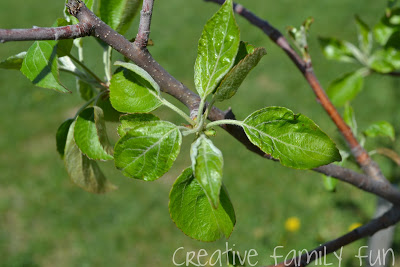
We took a trip out to our side yard recently to take a close look at our young apple tree.

We were talking about the different parts of trees and learning about how they grew.

We were specifically taking a look at the apple tree because we wanted to know how apples grew.

Disclosure: There are Amazon Affiliate and other affiliate links in this article which means, at no additional cost to you, we could receive compensation for our recommendations. You can read our full disclosure policy on our Disclosure Page for more details.

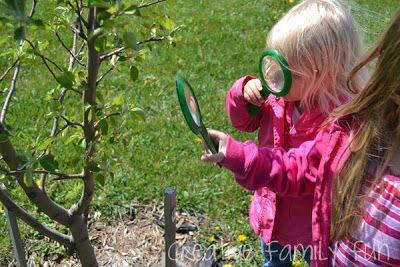
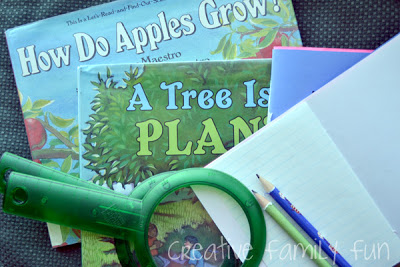
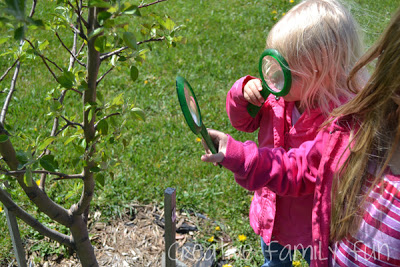
We gathered our supplies.We brought our magnifying glasses for observation.

Pencils and homemade notebooks for recording our observations.

We also brought two books, A Tree Is a Plant (Let’s-Read-and-Find-Out Science) by Clyde Robert Bulla and How Do Apples Grow? by Betsy Maestro, for research.


One of my goals with our nature studies, is to teach the girls about observation and drawing their own conclusions using what they’ve observed.

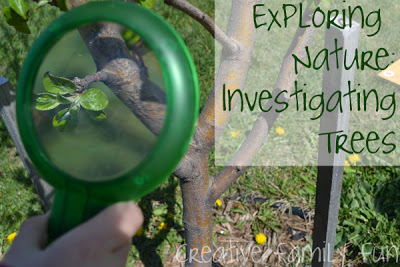
We talked about the bark of the tree, then we looked at it through our magnifying glasses and felt it with our fingers.

We talked about how apples are formed and looked all over to see if we could see any baby apples.

We also talked about the roots of a tree and then discussed why we couldn’t see the roots.

Here are some great questions to ask when teaching about observation.

What do you see?

What color is it?

What size is it?

Where is it located?

How does it feel? Bumpy, smooth, rough, etc.?

Does it have a scent?

Lead your kids a bit and help them learn to make observations.

For instance, we learned that the bark of a young apple tree is mostly smooth with a few bumps.

We also discovered some spots where there was yellow underneath the brown.

It’s amazing the things we discovered when we looked closely!

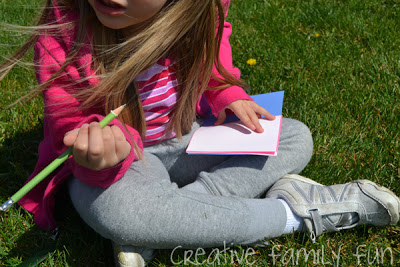
While we were observing and talking about trees, Lizzie recorded some of her own observations through drawing.

She copied a drawing of a baby tree from one of the books as well as drawing a fully-grown orange tree.

Older kids can use the space to record all the characteristics of what they are observing and the conclusions they drew from it. Have them draw a tree and label the parts or just try drawing what they are observing.

Do you like to look closely at nature? Have you ever been surprised at what you saw?

  • « Go to Previous Page
  • Page 1
  • Page 2
  • Page 3
  • Page 4
  • Page 5
  • Page 6
  • Go to Next Page »

Primary Sidebar

Footer

Categories

Archives

Copyright © 2026 · Designed by The Blog Surgery

Creative Family Fun uses cookies to improve your experience. These cookies provide feedback to our analytics and advertisers. We use the information to track views of the site, where you go and to know if you are a regular visitor or brand new as well as provide a personalized experience where possible. We'll assume you're ok with this, but you can opt-out if you wish.Accept Reject Read More
Privacy & Cookies Policy

Privacy Overview

This website uses cookies to improve your experience while you navigate through the website. Out of these, the cookies that are categorized as necessary are stored on your browser as they are essential for the working of basic functionalities of the website. We also use third-party cookies that help us analyze and understand how you use this website. These cookies will be stored in your browser only with your consent. You also have the option to opt-out of these cookies. But opting out of some of these cookies may affect your browsing experience.
Necessary
Always Enabled
Necessary cookies are absolutely essential for the website to function properly. This category only includes cookies that ensures basic functionalities and security features of the website. These cookies do not store any personal information.
Non-necessary
Any cookies that may not be particularly necessary for the website to function and is used specifically to collect user personal data via analytics, ads, other embedded contents are termed as non-necessary cookies. It is mandatory to procure user consent prior to running these cookies on your website.
SAVE & ACCEPT